Gebroeders Geens NWS:
Latest news
Read more

When do I use my diff-lock on my Knikmops?

Published on

Marleen Geens

When do I use my diff-lock on my Knikmops?

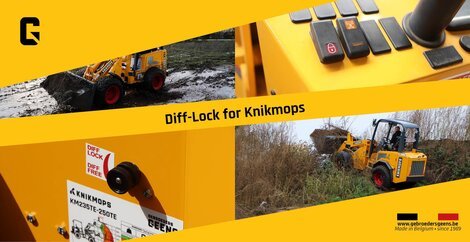
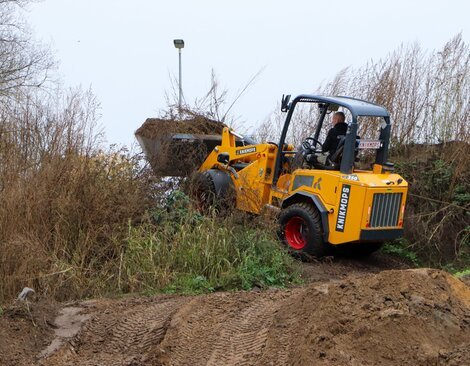
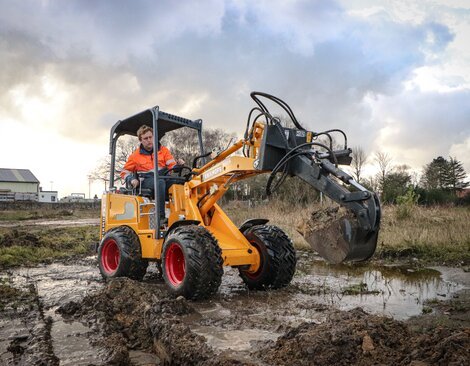
Knikmops has been developed for sturdy outdoor work. This means that the compact articulated loader must be able to perform on any surface. For this, your loader needs the right amount of traction in all conditions. This brings us to an underestimated feature on our Knikmops, namely the diff-lock.

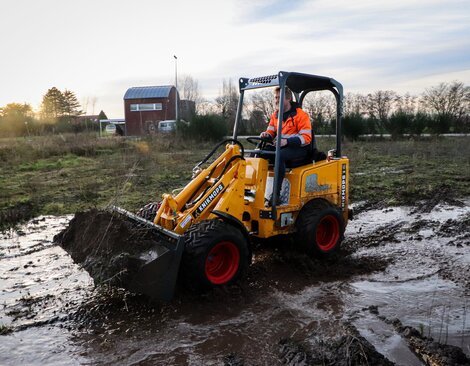
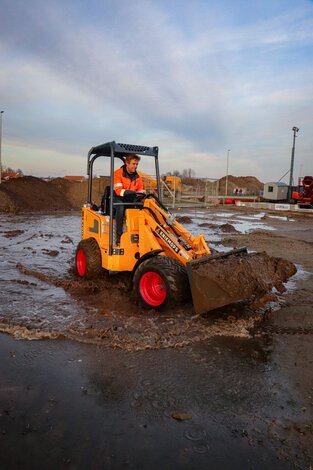
The diff-lock is standard on your Knikmops and ensures that your wheel loader continues to have the right amount of grip and performance on wet surfaces, muddy terrain or uneven surfaces.

What is the diff-lock?

Each Knikmops is equipped with four separate hydraulic motors. As a result, the articulated loader has a continuous 4-wheel drive.The diff-lock on the Knikmops ensures that both wheels on one axle receive the same amount of drive force. This prevents one wheel from spinning while the other remains stationary with little grip.

A standard differential on your articulated loader allows the left and right wheels to rotate independently of each other. This is ideal when cornering, as each wheel travels a different distance. If you engage the diff-lock, this speed difference between the wheels is partially or completely eliminated. So both wheels are driven and the Knikmops gets more traction.

When do you use the diff-lock?

By engaging the diff-lock on your Knikmops, you reduce the chance of the articulated loader getting stuck, and you maintain more control over the drive. It is best to engage it in situations with reduced traction, such as:

  • Muddy or wet surface
  • Loose sand or gravel
  • Snow or icy ground
  • Uneven terrain where a wheel may lift off the ground
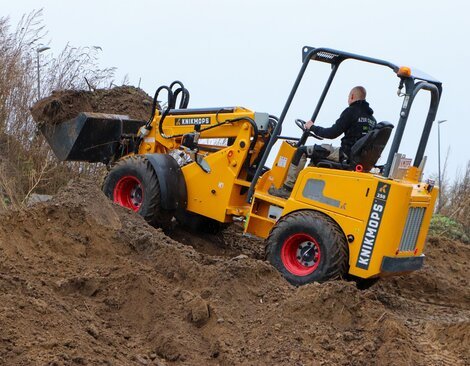
  • Working on slopes with a risk of slipping

In these conditions, the diff-lock helps to prevent slippage and seizing and improves the stability of the articulated loader.

Which diff-lock is provided as standard on Knikmops?

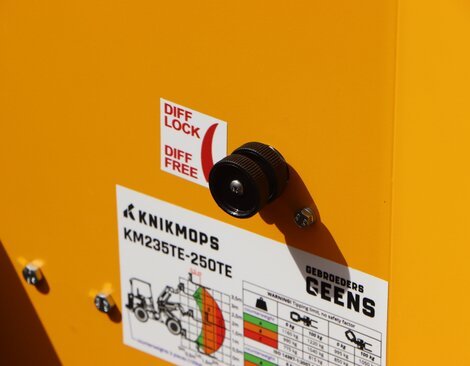
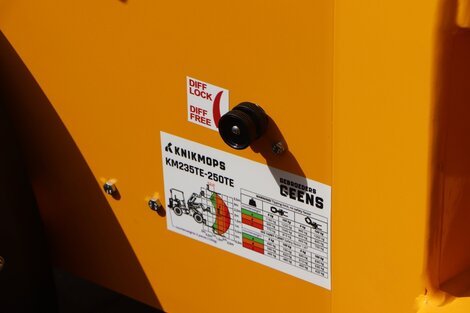
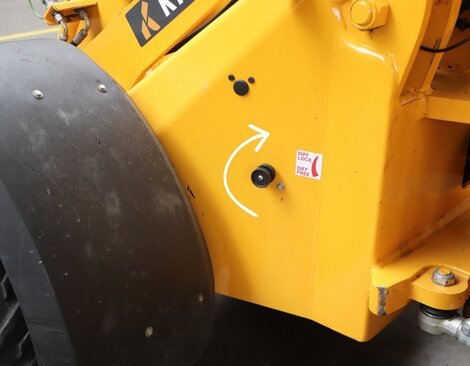
Gebroeders Geens provides a manual diff-lock on your Knikmops as standard. The adjustment knob is located on the front left of your Knikmops. Conveniently mounted, close to the step on and off. The driver engages or disengages the diff-lock depending on the conditions and personal preference.


What are the advantages of manual operation of the diff-lock?

  • Reliable solution for Knikmops users who only need extra traction from time to time.
  • Lower cost when buying your Knikmops
  • Simple and robust technology
  • Fewer electronic components

Electronic diff-lock: optional on your Knikmops?

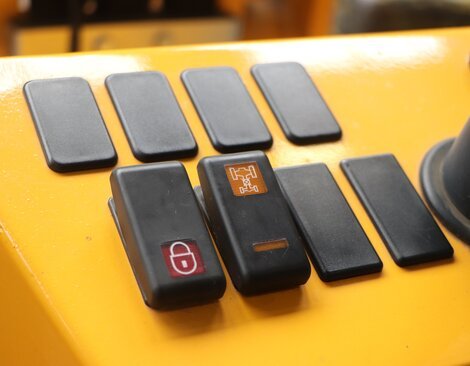
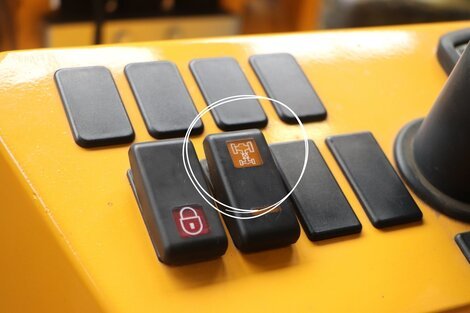
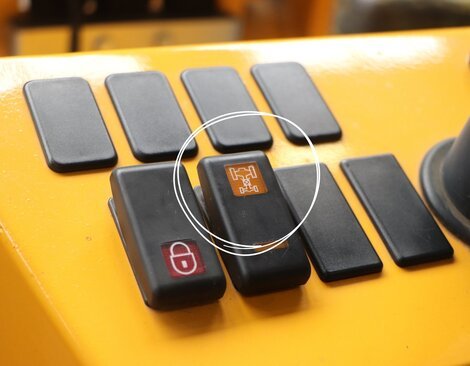
Optionally, the Knikmops user can choose a diff-lock with a button on the dashboard of the articulated loader. This means that the driver does not have to get off and on the wheel loader to engage the diff-lock.

What are the advantages of the electronic control of the diff-lock?

  • Faster switching during work
  • You can operate it from the Knikmops and you don't have to get on or off for this.
  • Reliable solution for Knikmops users who regularly need extra traction.

Which diff-lock is best for me and my Knikmops?

When buying your Knikmops, choose a manual diff-lock if:

  • You want to keep the purchase price of your articulated loader as low as possible.
  • You mainly work with your Knikmops on stable surfaces.
  • You only use the diff-lock on your Knikmops sporadically.
  • You prefer a simple, mechanical solution on your wheel loader.

When buying your Knikmops, choose an electronic diff-lock if:

  • You regularly work with your loader in varying conditions (muddy, wet surface/loose sand or gravel/snow or icy surface/uneven terrain where the wheel may lift off the ground/work on slopes with a risk of skidding)
  • You want to be able to switch quickly between more or less traction while working with your Knikmops.
  • Ease of use and efficiency are important to you.

What do I need to consider when using the diff-lock on my Knikmops?

When using your diff-lock, you should take note of a few things.

  1. Use the diff-lock of your Knikmops for a short period of time and for the right purpose.

Engage the diff-lock at the time when it will improve the handling of the articulated loader (muddy, wet ground/loose sand or gravel/snow or icy ground/uneven terrain where the wheel may lift off  the ground/work on slopes with a risk of skidding). But then disengage it again.

Do not use the diff-lock on hard and dry surfaces (e.g. on concrete or asphalt). The diff-lock on your wheel loader is also not suitable when taking sharp turns or travelling at high speed.

  1. Use the diff-lock only sporadically to avoid wear on your loader.

Prolonged or incorrect use of your diff-lock on your articulated loader can lead to increased and accelerated wear on your tires. The drivetrain of your loader can also become overloaded due to prolonged or incorrect use of your diff-lock.

The steering capacity of the articulated loader decreases when the diff-lock is engaged, which is in many cases unnecessary or even inconvenient. After all, the turning circle of your wheel loader increases when the diff-lock is engaged. So disengage the diff-lock during normal use of your Knikmops.

  1. Avoid increased rutting when using the diff-lock.

A Knikmops has low rutting. This is due to a number of factors:

    • Low own weight of the loader
    • Lowprofile tires as standard
    • 4 hydraulic motors that drive the wheels of your wheel loader

Using the diff-lock increases the traction of your Knikmops, but also the rutting. You can avoid this by only engaging the diff-lock when you need it and disengaging it during normal use of your Knikmops.

How the diff-lock works on your Knikmops in brief:

The diff-lock is a valuable option for any Knikmops user who regularly works on challenging terrain. Whether you opt for a manual or electronic version, both systems ensure that your Knikmops has more grip when the circumstances require it.

Are you looking for the Knikmops that suits you? Then be sure to ask about the options in the quote. This way you can completely adapt the Knikmops to your wishes.